On-Line/Live Event
EXCLUSIVE WEBINAR | “The History of Padua: From Troy to Giotto” with Ross King
October 8, 2026
1 hour
$25.00


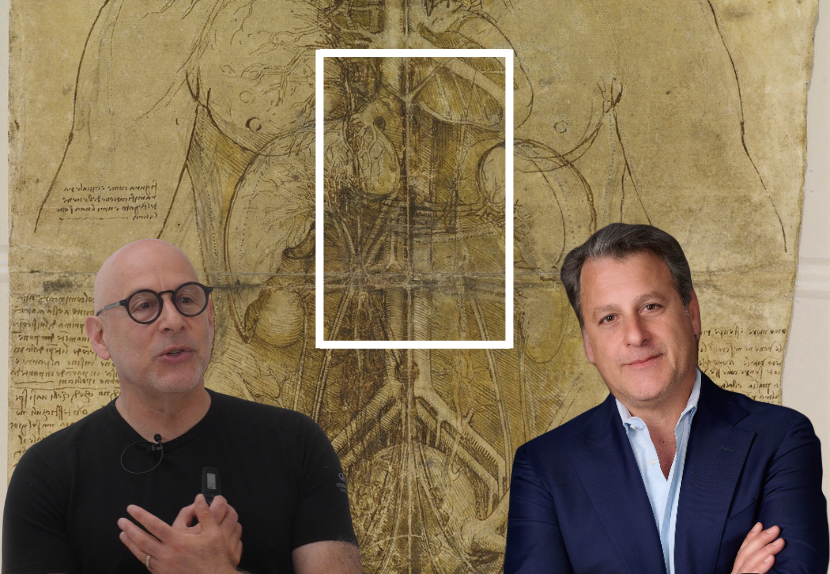
EXCLUSIVE WEBINAR “Anatomical Hits and Misses: The Old Masters and Human Anatomy”
Presented by Dr. Jeremy Wasser
with Additional Commentary by Dr. Rocky Ruggiero
Date & Time:
Thursday, October 15, 2026
2:00 – 3:00pm ET | 11:00am – 12:00pm PT |
7:00 – 8:00pm London
EXCLUSIVE WEBINAR | “Anatomical Hits and Misses: The Old Masters and Human Anatomy”
Presented by Dr. Jeremy Wasser
with Additional Commentary by Dr. Rocky Ruggiero
How do you think he does it? I don’t know.
What makes him so good?
Pinball Wizard, The Who, 1969
The Masters of the Renaissance and Baroque were so good at representing the human form in drawing, painting and sculpture thanks to their personal experience with human anatomical dissection. This scientific training was mostly unavailable to artists of an earlier era and some of the Masters took to it with a vengeance. Leonardo da Vinci claimed to have participated in about 30 human dissections, some of them in collaboration with perhaps the greatest medical anatomist of his day, Marc’Antonio della Torre.
According to Vasari, it was Antonio Pollaiuolo (ca. 1432–1498) who was the “first master to skin many human bodies in order to investigate the muscles and understand the nude in a more modern way.” Like Pollaiuolo, most of these artists were concerned solely with musculoskeletal anatomy, and integument (skin, hair), all features of the outside of the body and thus the parts of the human form they were planning to draw, paint or sculpt.
However, they also developed a deep appreciation and understanding of biomechanics, the way in which humans (and other animals) stand and move as this was another crucial aspect of their artistic depictions. The drawings of da Vinci and the sculptural works of Michelangelo are supreme examples of the application of biomechanical knowledge to the depiction of the human form.
Skilled and experienced as they were in human anatomy, these Masters who gave us some of the most incredible examples of anatomical accuracy in art still made mistakes. Pretty big mistakes and for a variety of reasons.
Join physiologist and medical historian, Dr. Jeremy Wasser, as we explore the anatomical training and experiences of da Vinci, Michelangelo, Rembrandt and other Masters. How did that training translate into some of the most exquisite (and exquisitely accurate) images of the human body ever made. We will also look at some major errors by these artists and seek to understand the reasons why an anatomical Master could create both so many beautiful anatomical hits along with some extraordinary anatomical misses!
The webinar will include a 45-minute lecture followed by 15-minutes of Q&A.
Please note:
Jeremy Wasser, Ph.D. is an Associate Professor of Physiology at Texas A&M University. Dr. Wasser serves as the program leader for study abroad programs in Germany, focused on the history of medicine, providing future doctors and biomedical science researchers with a foundation in physiology and the medical humanities. Along with his scientific publications he has written and lectured on the culture of disease, the history of public health and health policy, the history of human experimentation, and the role of physiological education in contemplative practices. Additionally, Wasser’s training in opera and theatre inform the unique personas that he creates for lectures in the history of medicine and performances related to science and storytelling.