On-Line/Live Event
FREE WEBINAR | “Masterpieces of the Accademia Gallery in Venice” with Dr. Rocky Ruggiero
October 20, 2026
1 hour


ONLINE HISTORY COURSE
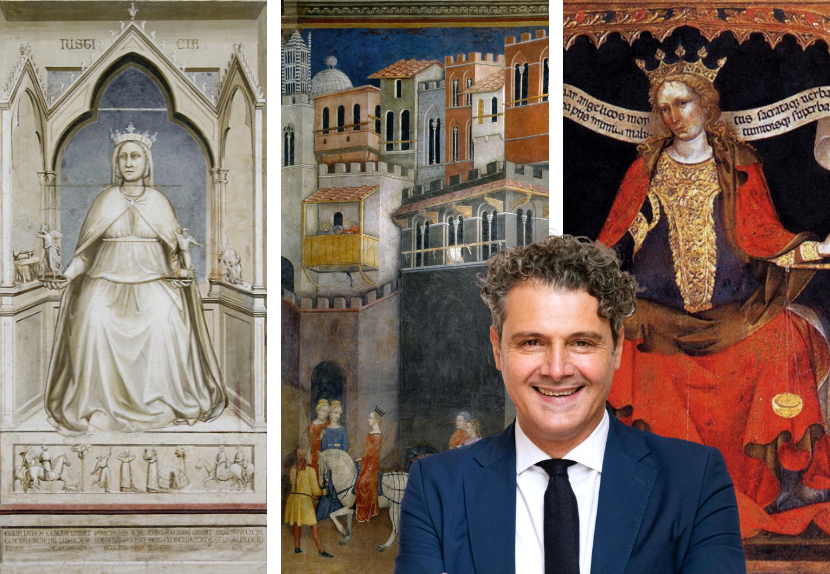
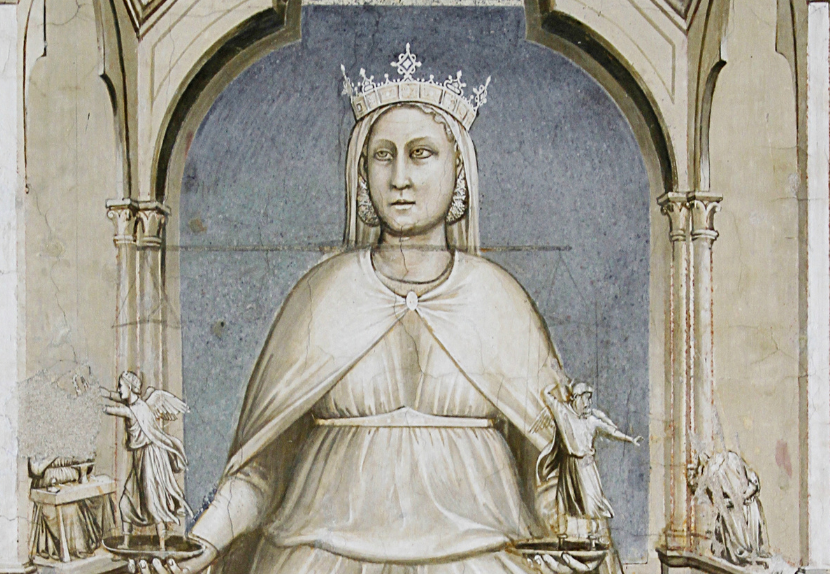
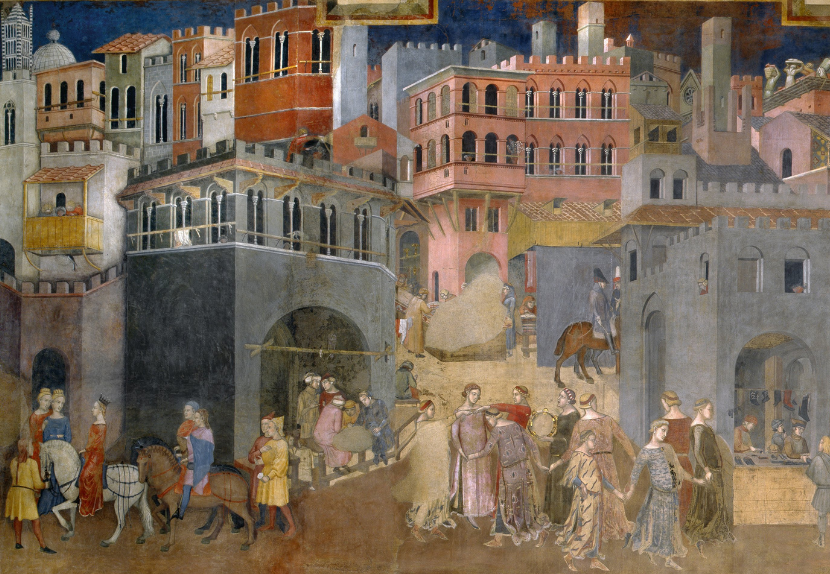
“Justice in Late Medieval Italy: Conflict, Exclusion, and the Making of Communal Order”
LIVE HISTORY COURSE with Dr. Fabrizio Ricciardelli
Dates: April 14, 21 and 28, 2027
Schedule: Wednesdays
Time: 2:00 – 3:15pm ET | 11:00am – 12:15pm PT |
7:00 – 8:15pm London
Contact Hours: 3 Hours 45 Minutes
Credits: Certificate of Completion
ONLINE HISTORY COURSE “Justice in Late Medieval Italy: Conflict, Exclusion, and the Making of Communal Order”
Course Description:
This course explores the central role of justice in the political, social, and cultural life of late medieval Italy. Between the thirteenth and fifteenth centuries, Italian communes were not only places of economic vitality and artistic innovation; they were also arenas of intense conflict, institutional experimentation, and civic self-definition. Justice stood at the heart of this world. It was the language through which communities imagined order, punished transgression, regulated factional violence, and defined who belonged — and who did not.
The three lectures examine justice not simply as a legal mechanism, but as a political and cultural practice. In late medieval cities such as Florence, Siena, Bologna, Perugia, Venice, Milan, and Lucca, courts, statutes, public rituals, trials, punishments, and acts of exclusion helped shape communal identity. Justice was invoked to defend the common good, but it could also become an instrument of domination, vendetta, social discipline, and political exclusion.
The course will consider how communal mentality was represented through conflict; how political communities created themselves by excluding enemies, foreigners, rebels, magnates, heretics, and marginal groups; and why justice became one of the most important foundations of civic legitimacy. Through examples drawn from late medieval Italy, the course will show that justice was not merely a response to disorder. It was one of the principal ways in which Italian communes understood themselves, governed their citizens, and imagined the relationship between law, power, and society.
Virtual Classroom: Full access to an online educational platform with videos of recordings, syllabus and readings.
Location: LIVE INTERACTIVE ON-LINE HISTORY LECTURES
Optional Readings: Information will be provided 2 weeks before the start of the course.
Complete syllabus will be provided 2 weeks before the start of the course.
LECTURE 1 – Conflictual Representation of Communal Mentality
Wednesday, April 14
The first lecture investigates conflict as a key to understanding the mentality of late medieval Italian communes. Communal society was deeply shaped by tension: between families, factions, neighborhoods, corporations, political parties, and social groups. Conflict was not simply a sign of instability; it was also a language through which civic values, collective fears, and institutional ideals were expressed.
In cities such as Florence, Bologna, Siena, and Perugia, political life was often represented through oppositions: Guelfs and Ghibellines, popolo and magnates, citizens and enemies, peace and vendetta, justice and tyranny. Communal statutes, chronicles, judicial records, and public rituals reveal a society that constantly defined itself through confrontation. The commune presented itself as the guardian of peace and the common good, yet its identity was built in a world marked by rivalry, violence, and competition for honor and power.
This lecture will examine how conflict shaped communal imagination and political culture. Particular attention will be given to vendetta, factionalism, civic rhetoric, and the institutional attempt to transform private violence into public justice. The aim is to show that the late medieval Italian commune did not eliminate conflict; rather, it organized, represented, and interpreted conflict as part of its own political identity.
LECTURE 2 – The Politics of Exclusion
Wednesday, April 21
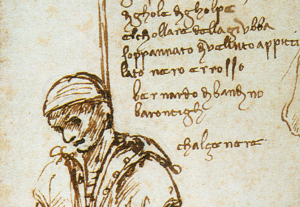
The second lecture focuses on exclusion as a fundamental instrument of communal government. Late medieval Italian cities defined political belonging not only by including citizens within institutions, guilds, councils, and offices, but also by identifying those who had to be marginalized, punished, expelled, or deprived of rights. Exclusion was therefore not accidental: it was a political practice central to the construction of civic order.
Examples from Florence, Siena, Venice, Bologna, and other Italian cities show how communes used legal and political mechanisms to exclude dangerous or undesirable groups. Magnates could be restricted from office; political enemies could be exiled; rebels could be declared outlaws; entire families could be punished for factional violence; foreigners, Jews, heretics, prostitutes, and the poor could be subjected to specific forms of regulation and social control. Banishment, confiscation of property, public shaming, and civic disqualification became tools through which the commune defended itself and reinforced its authority.
This lecture will explore the relationship between exclusion and justice. It will ask how communities justified exclusion in the name of peace, security, morality, or the common good. At the same time, it will consider the ambiguity of these practices: exclusion could protect civic order, but it could also serve partisan interests and consolidate the power of dominant groups. In late medieval Italy, justice often drew the boundary between the citizen and the enemy.
LECTURE 3 – The Central Role of Justice
Wednesday, April 28
The third lecture examines justice as one of the central pillars of late medieval Italian political culture. In the communal world, justice was more than the work of courts and judges. It was a civic ideal, a public performance, and a source of legitimacy. To govern well meant to administer justice; to defend liberty meant to protect law; to preserve the commune meant to punish those who threatened peace and the common good.
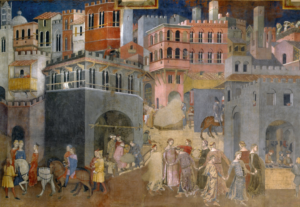
Italian cities developed complex judicial systems, written statutes, magistracies, notarial procedures, prisons, and forms of public punishment. Florence’s Ordinances of Justice, Siena’s civic imagery of good government, Venice’s institutions of state security, and the criminal courts of many communal cities all demonstrate the importance of justice in shaping authority. Justice was visible in palaces, squares, statutes, frescoes, rituals, and executions. It was both an administrative practice and a symbolic language.
This lecture will analyze justice as the bridge between law and politics. It will consider how communal governments used justice to present themselves as legitimate, impartial, and protective of the common good, even when justice was often entangled with faction, social hierarchy, and political necessity. The lecture will conclude by showing that late medieval Italian justice was not a marginal aspect of civic life. It was one of the essential ways in which the commune imagined order, exercised power, and gave meaning to political community.
Fabrizio Ricciardelli earned his undergraduate degree in Medieval History at the University of Florence (Italy) and his Ph.D. at the University of Warwick (England). Since 2004 hew was professor of “Renaissance History” at Georgetown University. Between 2010-2012 he was Academic Director of the Georgetown University program in Florence. In 2010 he became Chairman of the scientific committee “Villa Le Balze Studies”. In 2012 he was appointed Director of the Kent State University program in Florence. His academic experience includes journal articles, conference presentations, and several reviews. He has authored and co-authored numerous books on institutional and political history. His main field of study is Italian city-states in the social, economic, political, and cultural landscape of Medieval Europe. Ricciardelli has recently embarked upon the study of the relationship between emotions and passions as forms of political persuasion in Renaissance Italy. His latest publication are A Short History of Florence(2019) and The Medici. The Power of a Dynasty(2021).