New York, NY
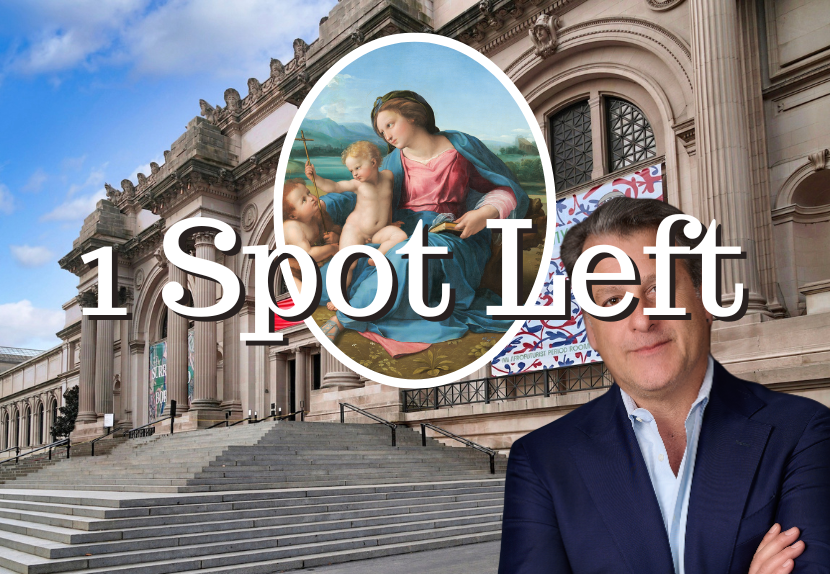
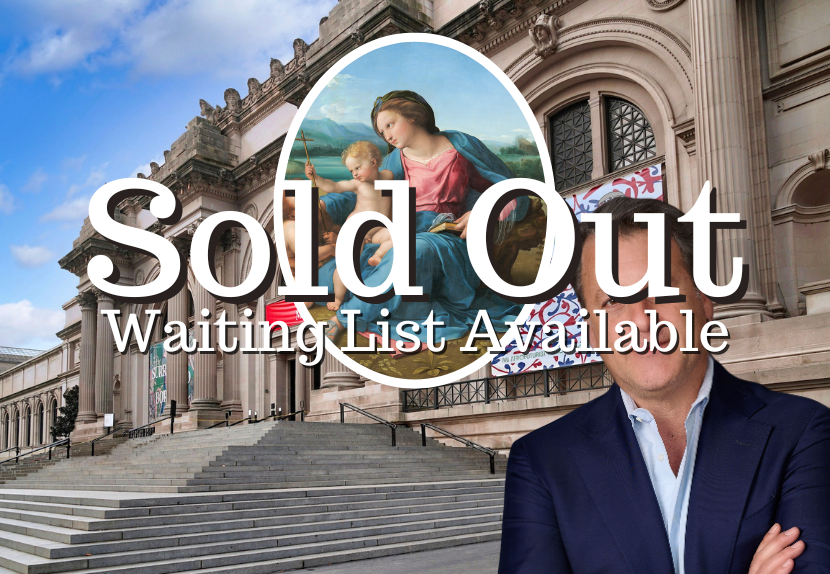
THE METROPOLITAN MUSEUM OF ART | “Raphael at the Met” Event- 12:30pm
April 10, 2026
1 hour 30 min
$325.00
EXCLUSIVE WEBINAR BUNDLE
“Exclusive Webinars in May”
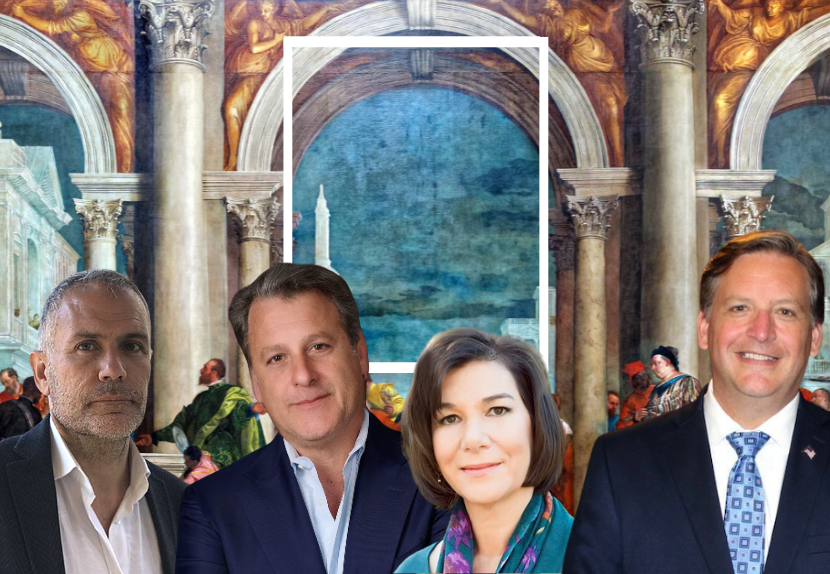
Presented by Dr. Rocky Ruggiero and special guests Anthony Amore, Susan Jaques, and Dr. Paolo Alei
Dates & Times:
Thursday, May 7, 14, 21 & 28, 2026
2:00 – 3:00pm ET | 11:00am – 12:00pm PT |
7:00 – 8:00pm London
EXCLUSIVE WEBINARS | “Exclusive Webinars in May”
Each webinar will include a 45-minute lecture followed by 15-minutes of Q&A.
Please note:
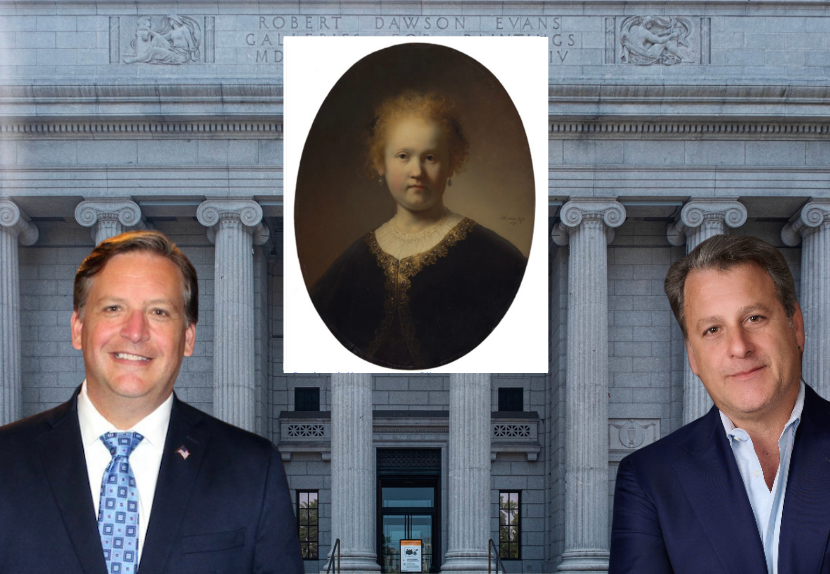
EXCLUSIVE WEBINAR | “The Rembrandt Heist”
Presented by Anthony Amore
The webinar will tell the story of Myles Connor, the greatest art thief in history. You will learn what makes him unique as well as the incredible tale of the 1975 heist at Boston’s Museum of Fine Arts.
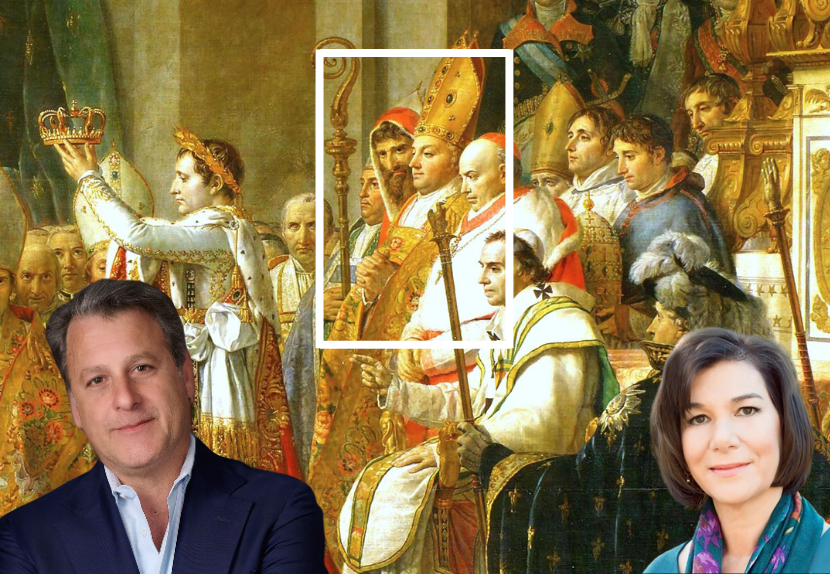
EXCLUSIVE WEBINAR | “The Emperor, the Pope, and their Sculptor”
Presented by Susan Jaques
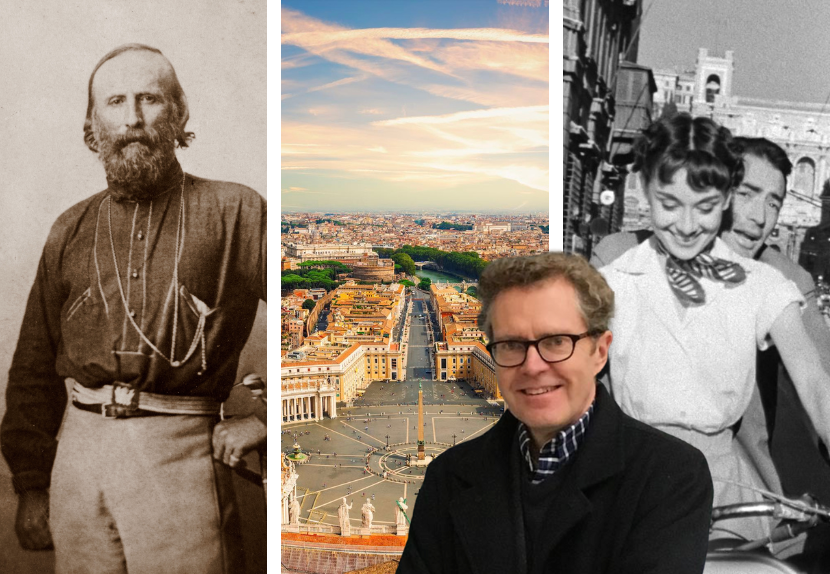
Pope Pius VII stayed at Fontainebleau twice: first as a guest at Napoleon’s 1804 coronation; then as his prisoner from 1812 to 1814. Their decade long confrontation reflects the tensions between the determined religious leader who insisted on political independence and the powerful emperor who renamed Rome the “second capital of the Empire.” Throughout the fraught relationship, neoclassical sculptor Antonio Canova played conflicting roles as the Bonaparte family’s favorite portraitist and the pope’s loyal diplomatic envoy. Back in Rome after Napoleon’s defeat, Pius VII dispatched Canova to Paris to negotiate the return of Italy’s looted art treasures. “The Emperor, the Pope, and their Sculptor” explores the struggle for supremacy between the two leaders and the role of art in this consequential conflict.
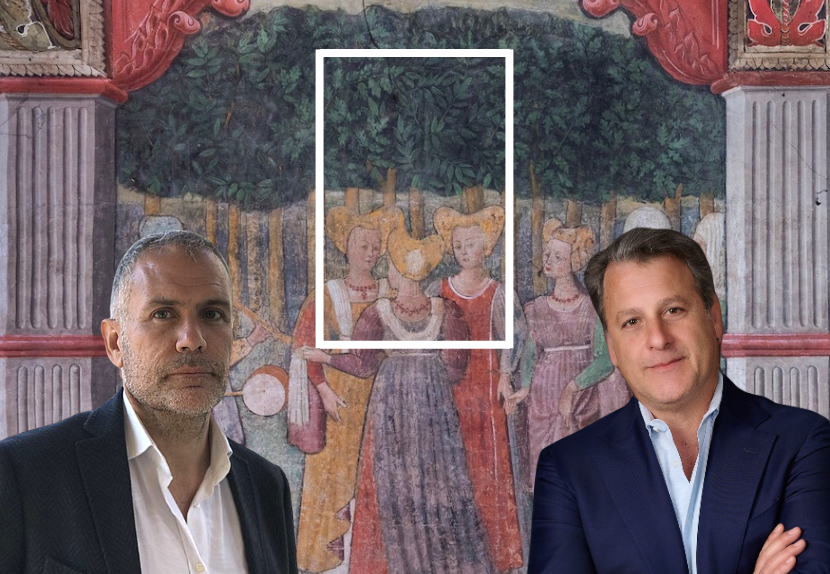
EXCLUSIVE WEBINAR | “The Pope’s Daughter: Felice della Rovere and the Art of Power at the Castle of Bracciano”
Presented by Dr. Paolo Alei
Felice della Rovere’s life may be understood as a remarkable act of self-fashioning, in which identity was not passively inherited but consciously forged at the unstable intersection of lineage, gender, dynastic ambition, and representation. As the daughter of Giuliano della Rovere, the future Pope Julius II, she was born into one of the most formidable familial constellations of Renaissance Italy; yet what makes her so compelling is not merely the distinction of her origins, but the intelligence with which she transformed that inheritance into a visible and enduring form of authority. Through marriage, motherhood, widowhood, and the careful management of property, memory, and prestige, Felice emerges as a woman of unusual political acuity, capable not only of inhabiting the roles assigned to her, but of subtly reshaping them from within. She did not simply occupy a place within the structures of power that surrounded her; she fashioned a presence that was at once aristocratic, dynastic, and profoundly self-aware. It is in Bracciano, however, that this process becomes most palpable and most moving. The castle was not merely the place where she lived, first as the wife of Gian Giordano Orsini and later as a widow, but the privileged space in which her identity assumed architectural and artistic form. Here patronage became a mode of self-inscription: through spaces, images, dynastic emblems, and devotional expression, Felice shaped the Castello Orsini-Odescalchi into a living statement of rank, piety, continuity, and memory. Bracciano thus preserves more than the trace of her residence.
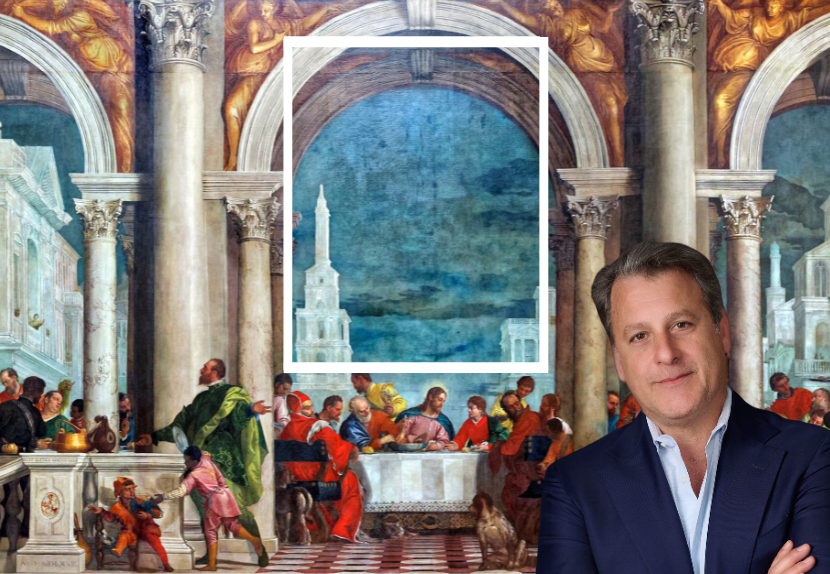
EXCLUSIVE WEBINAR | “In the Hot Seat: Veronese, the Inquisition, the Painting Formerly Known as the Last Supper”
Presented by Dr. Rocky Ruggiero
On July 18, 1573, the Venetian painter Paolo Veronese was interrogated by the Holy Office of the Inquisition, which accused him of painting an indecorous “Last Supper” complete with “Germans, jesters, and buffoons.” Astonishingly, the records of this interrogation have survived down to our own day. Join Dr. Rocky for this exclusive webinar as he reexamines Veronese’s day “in the hot seat,” and discover how a Renaissance artist defended his creative freedom against censorship.