
No products in the cart.

On-Line/Live Event
EXCLUSIVE WEBINAR | “Reading between the Brushstrokes: Imagery and Meaning in Italian Renaissance Painting” ...
March 26, 2026
1 hour
$25.00


EXCLUSIVE WEBINAR BUNDLE
“Exclusive Webinars in March”
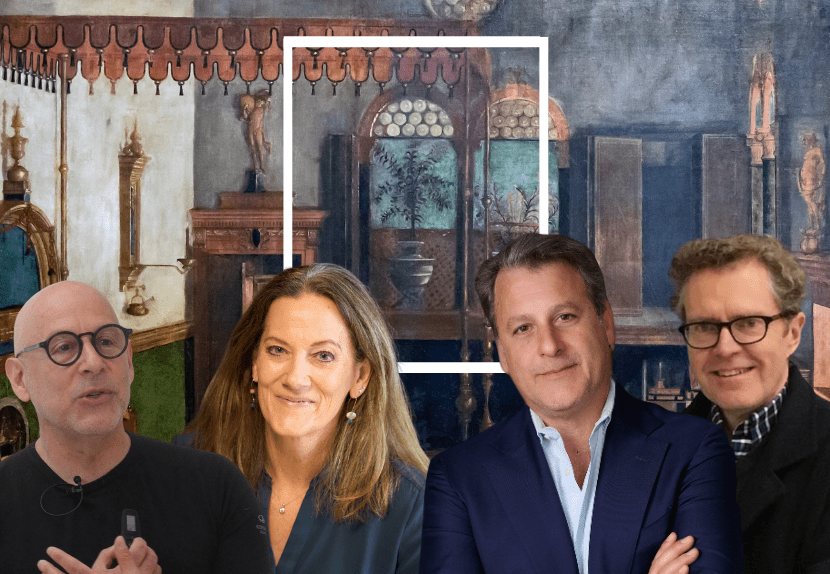
Presented by Dr. Rocky Ruggiero and special guests Ross King, Dr. Sally J. Cornelison, and Dr. Jeremy Wasser
Dates & Times:
Thursday, March 5, 12, 19 & 26, 2026
2:00 – 3:00pm ET | 11:00am – 12:00pm PT |
March 5: 7:00 – 8:00pm London | March 12, 19, & 26: 6:00 – 7:00pm London (time change due to daylight savings)
EXCLUSIVE WEBINARS | “Exclusive Webinars in March”
Each webinar will include a 45-minute lecture followed by 15-minutes of Q&A.
Please note:
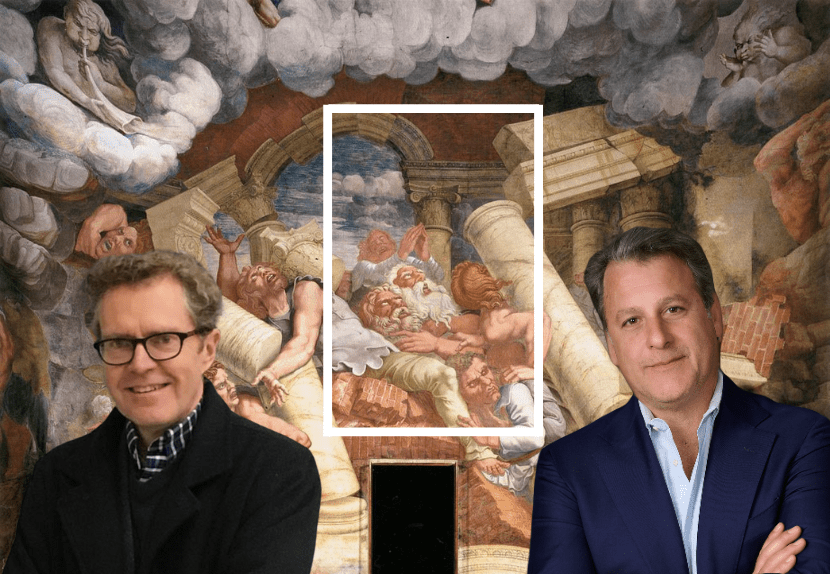
EXCLUSIVE WEBINAR | “1527: The Sack of Rome and the End of the Renaissance in Italy”
Presented by Ross King
In May 1527, Rome suffered one of the most devastating catastrophes in its long history. The Sack of Rome, carried out by mutinous imperial troops during the wars between Pope Clement VII and the emperor Charles V, was a moment of extraordinary violence that marked a turning point for Europe itself. This lecture explores why the sack happened, what it revealed about the fragile balance of power in Renaissance Italy, and how it reshaped the political, religious and artistic landscape of the continent.
The bloodshed and upheaval had profound psychological and cultural consequences. The Sack of Rome marked the abrupt end of Rome’s High Renaissance golden age: balance, harmony and classical optimism give way to anxiety, distortion and spiritual intensity. It triggered a dramatic “diaspora” of artists, as painters, sculptors and engravers fled the ruined city for courts across Italy, France, and beyond. Their dispersal helped spread a new artistic language across Europe – Mannerism – transforming the course of art history.

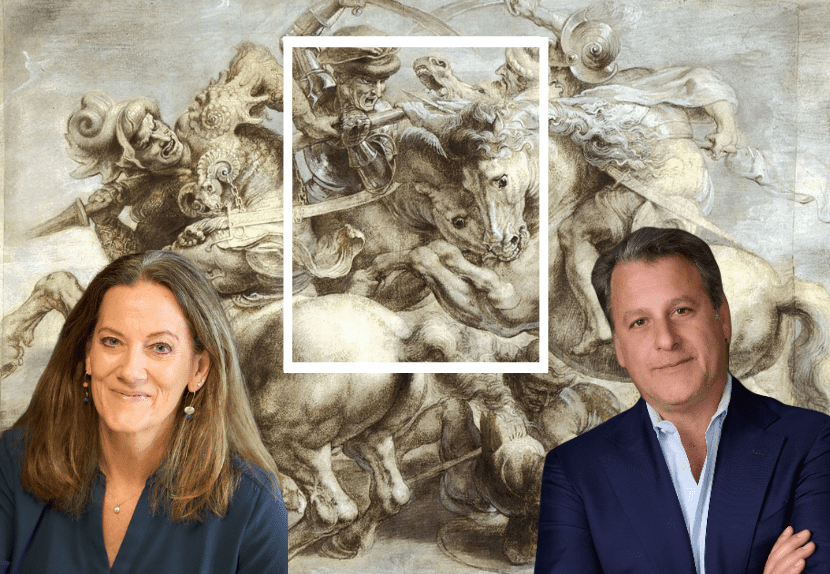
EXCLUSIVE WEBINAR | “When Good Murals Go Bad: Leonardo da Vinci’s Lost Battle of Anghiari”
Presented by Dr. Sally J. Cornelison
In 1503, Leonardo da Vinci was commissioned to paint a fifteenth-century battle that took place between Florence and Milan near the Tuscan town of Anghiari in the Hall of the Great Council in Florence’s Palazzo Vecchio. The celebrated artist began painting a portion of the skirmish in oil on plaster, rather than in the more durable medium of fresco that most Renaissance artists employed for large-scale mural paintings. He never finished the painting before leaving Florence permanently in 1505, and any trace of what by all accounts was a magnificent, if incomplete and damaged, work disappeared when Giorgio Vasari renovated the council hall in the 1560s. This webinar delves into the technical history of Leonardo’s unfinished Battle of Anghiari and its afterlife, including the controversial search for remnants of the painting under Vasari’s later frescoes.

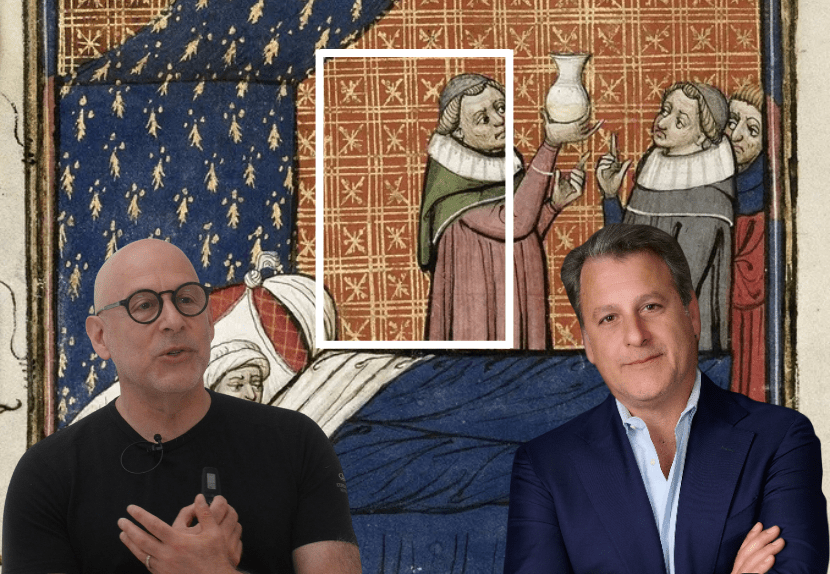
EXCLUSIVE WEBINAR | “The Color of Healing: The Role of Color in Diagnosis and Therapy in Premodern Medicine”
Presented by Dr. Jeremy Wasser
He knew the cause of everich maladye,
Were it of hoot or cold, or moiste, or drye,
And where engendred, and of what humour;
He was a verrey parfit practisour:
Geoffrey Chaucer, The Canterbury Tales, General Prologue, lines 419–22
In the illuminated early 15th century manuscript of The Canterbury Tales known as the Ellesmere Chaucer, this description of the physician-pilgrim is accompanied by a painted miniature of the doctor on horseback, holding up for inspection a matula, a urine flask filled with a yellow-colored sample. The importance of uroscopy, the examination of urine for color, turbidity, the presence of particulates, smell and even taste was such a critical element of premodern medicine that the flask itself became the emblem of doctor-ness, much as the stethoscope is today. The ubiquity of uroscopy as practiced in the premodern world meant that the color diagrams physicians used (called uroscopy wheels) played a primary role in diagnosing disease.
Color also was a therapy for ailments ranging from skin diseases, ophthalmologic disorders, and even smallpox. John of Gaddeson (1280-1361), one of the most famous medieval English physicians and a contemporary of Chaucer, may have been the model for the physician-pilgrim in The Canterbury Tales. From Gaddeson’s magnum opus, Rosa Medicinae (Rose of Medicine), we have his color-based therapy for the treatment of smallpox:
Then take scarlet cloth and wrap the patient entirely in it, or in another red cloth. This is what I
did for the son of the most noble King of England when he was suffering from these diseases,
and I made everything around the bed red. It is a good treatment, and I cured him afterward
without any traces of smallpox.
Even today color plays a role in diagnosis and therapy. That red-light therapy was of value in treating smallpox patients (at least in terms of minimizing the degree of permanent pitting of the skin from the pustules) formed the basis for the awarding of the 1903 Nobel Prize in Physiology or Medicine to the Danish physician, Niels Ryberg Finsen. The medical specialty he created, now known as photobiomodulation, uses colored light in the treating of dermatologic diseases and more recently other somatic and psychological conditions.
Join physiologist and medical historian, Dr. Jeremy Wasser, for a discussion of the medical history of color as a diagnostic and therapeutic tool. We will explore the ancient reasoning for why color was thought to be medically important and delve into the ways in which it was used to diagnose and treat medical conditions by premodern practitioners. We will also shine a light (so to speak) on how color is used for diagnosis and therapy in the 21st century.

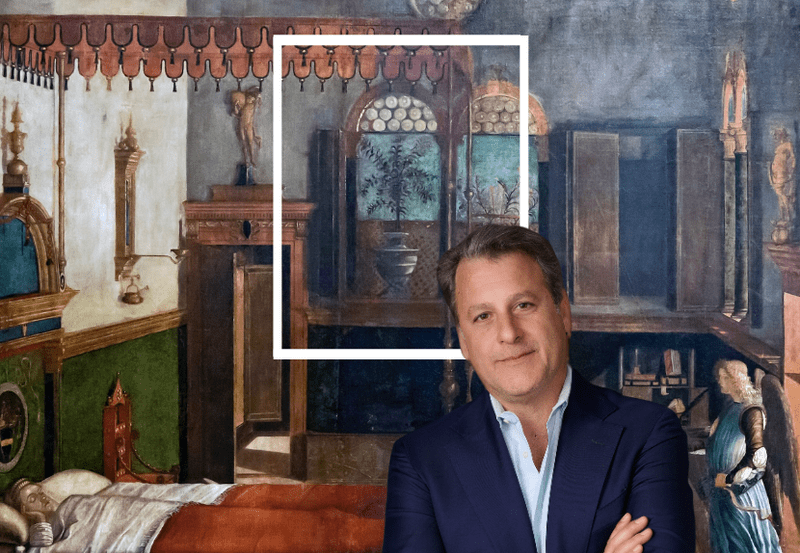
EXCLUSIVE WEBINAR | “Reading between the Brushstrokes: Imagery and Meaning in Italian Renaissance Painting”
Presented by Dr. Rocky Ruggiero
While famous masterpieces such as the “Mona Lisa,” the “Birth of Venus,” and the “Sistine Chapel, Ceiling” draw massive crowds in Italy, most Italian Renaissance paintings in US museums are passed over for more readable, recognizable, and user-friendly 19th and/or 20th-century paintings. Museum-goers today often have a difficult time recognizing the characters, knowing the theology, identifying with the morality, or understanding the function of most Italian Renaissance paintings. Dr. Rocky Ruggiero will “read between the brushstrokes” to explain the meaning behind the imagery of painted masterpieces from the Italian Renaissance.


