
Atlanta, GA
HIGH MUSEUM OF ART | “Italian Renaissance Masterpieces” In Person Lecture Tour
March 13, 2026
1 hour 30 minutes
$295.00



EXCLUSIVE WEBINAR BUNDLE
“Exclusive Webinars in January”
Presented by Dr. Rocky Ruggiero and special guests Anthony Amore, Dr. Eric Nicholson, and Dr. Balbina Y. Hwang
Dates & Times:
Thursday, January 8, 15, 22 & 29, 2026
2:00 – 3:00pm ET | 11:00am – 12:00pm PT |
7:00 – 8:00pm London
EXCLUSIVE WEBINARS | “Exclusive Webinars in January”
Each webinar will include a 45-minute lecture followed by 15-minutes of Q&A.
Please note:
EXCLUSIVE WEBINAR | “Stealing Rembrandts”
Presented by Anthony Amore
As we’ve seen recently at the Louvre, art theft is an ongoing worldwide problem. Using the theft of Rembrandts as an example, Anthony Amore will tell the true story behind major art heists. You will learn who really steals masterpieces, why they do it, and what becomes of the art.
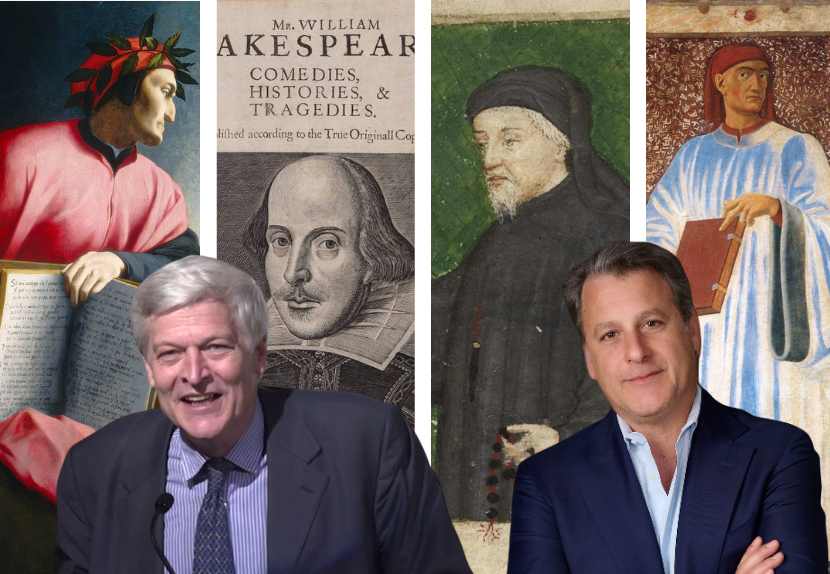
EXCLUSIVE WEBINAR | “When We Read Chaucer and Shakespeare We’re Also Reading Dante and Boccaccio”
Presented by Dr. Eric Nicholson
This special webinar aims to show that if one reads not only between but behind and even within the lines penned by Geoffrey Chaucer and William Shakespeare, one will often encounter the writings of their precursors Dante Alighieri and Giovanni Boccaccio. Chaucer, in fact, wrote two long poems that engage with and emulate entire works by the Italian authors: his House of Fame is a response to Dante’s Divine Comedy, and his Troilus and Criseyde is based on Boccaccio’s Filostrato. The fourteenth-century English poet admired Dante so much that he imports lengthy passages from Infernoand Paradiso into several of his Canterbury Tales and their Prologues, including Saint Bernard’s prayer to the Virgin Mary (Paradiso XXXIII): with his full command of Italian, Chaucer knew these verses by heart. Meanwhile, the tale-telling Monk, as he concludes his version of Count Ugolino of Pisa’s tragic story, gives the advice “Redeth the grete poete of Ytaille/ That highte Dant, for he kan all devyse/ Fro point to point; nat o word wol he faille” (“Read the great poet of Italy/ Named Dante, for he can narrate all/ From point to point; not one word will he get wrong”). Chaucer travelled to Italy, where he may even have met Boccaccio, but there is no doubt that he drew inspiration and specific material from the Italian author’s anthology of 100 novelle: a notable example is the Clerk’s Tale, an adaptation of probably the most provocative and hotly debated Decameron story, that of “Patient Griselda” and her tyrannical husband Gualtieri. Although Dante was less of an influence on Shakespeare, the comedy Much Ado About Nothing does feature a charismatic leading lady named Beatrice who quips that she has been to the gates of hell, where she was told to get herself to heaven. The Decameron, on the other hand, shapes several Shakespearean plays featuring other brilliant and courageous women, most especially All’s Well That Ends Well, set partially in Florence and based on the story of Giletta di Narbona, and Cymbeline,with its Italianate characters and plot derived from the story of Ginevra, Bernabò, and Ambrogiuolo. Just as importantly, the innovative poetic as well as prose techniques and the vast range of complex ideas explored in the two Italian writers’ masterpieces crucially enabled Chaucer and Shakespeare to create their own English classics.
EXCLUSIVE WEBINAR | “In Refutation of Machiavelli’s The Prince: Giovanni Botero’s Della Ragion di Stato (Reason of State)”
Presented by Dr. Balbina Y. Hwang
In his iconic work “The Prince,” Niccolò Machiavelli argued that a ruler could not govern morally and also be successful. In fervent response, Giovanni
Botero (c. 1544-1617) – a Savoyard philosopher, priest, poet, and diplomat – offered an eloquent refutation of Machiavelli’s argument in his treatise, “Della Ragion di Stato” (“Reason of State”). Although almost unrecognized today, Botero’s work was a political “bestseller” well into the 17th century, and his ideas greatly influenced the development of modern disciplines in political and social sciences, and even the study of economics. But perhaps his greatest contribution was launching an anti-machiavellian tradition of disputing Machiavelli not just in theory, but in the practice of politics, by proposing a system for the maintenance and expansion of a political state that can retain its moral character. In doing so, Botero made a significant contribution to the major political debate dominating 16th century Italian City-States: the relationship between politics and morality. Most significantly, Botero popularized the term “reason of state,” and was instrumental in establishing the modern concept of the political state-system. This webinar explores the fascinating life and work of this largely forgotten but important political theorist, who flourished during the tumultuous years of post-Renaissance Italy and Europe.
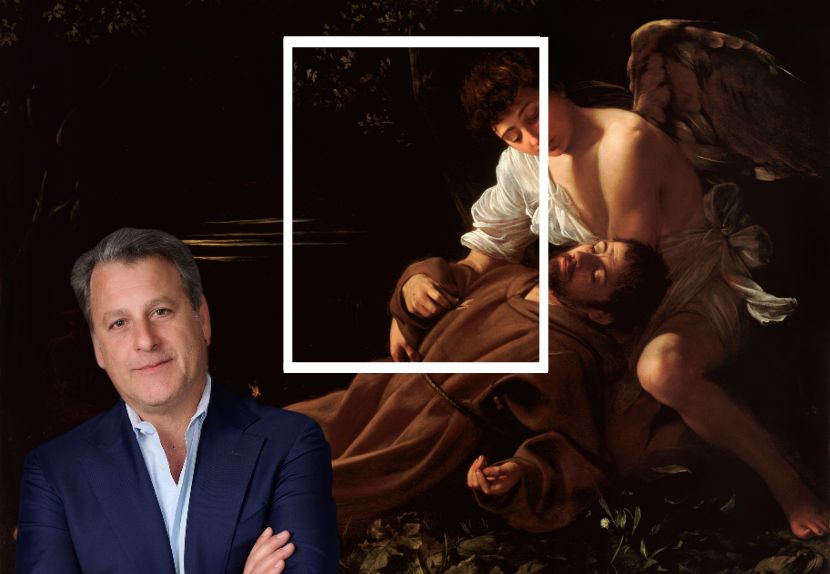
EXCLUSIVE WEBINAR | “An Instrument of Peace: St. Francis of Assisi in Italian Renaissance Art”
Presented by Dr. Rocky Ruggiero
St. Francis of Assisi is one of the best known and most loved saints in the Catholic Church. Not surprisingly, he was often represented in Italian Renaissance art by artists such as Giotto, Donatello, Bellini, Titian, and Caravaggio – just to name a few. Join Dr Rocky for this exclusive webinar as he explores the various representations of the medieval saint in various Renaissance masterpieces.